
Metal Roof vs. Shingles in Florida: Which Fits a Home in The Villages?
When a roof in The Villages comes due for replacement, the metal question usually follows close behind. A neighbor switched, an insurance renewal mentioned roof age, or a contractor brought it up at the door. Weighing a metal roof vs shingles in Florida comes down to a few practical points for your house: your budget, how long you plan to stay, what your district's Architectural Review Committee will approve, and how the new roof will be documented for insurance.
Architectural shingles cost less up front, are simpler to repair, and match the look of most homes in The Villages. Metal costs more up front and needs a crew experienced with metal, but manufacturers generally rate it for a longer service life than asphalt shingles. If you plan to stay in the home for many years and the ARC approves it, metal is worth pricing. If you want the lowest cost now, the easiest repairs and a familiar look, a well-installed shingle roof remains a strong choice in Central Florida.
NB Roofs installs both, which is why this guide does not push one material. Here is how they compare on the points that matter here.
How the two roofs differ
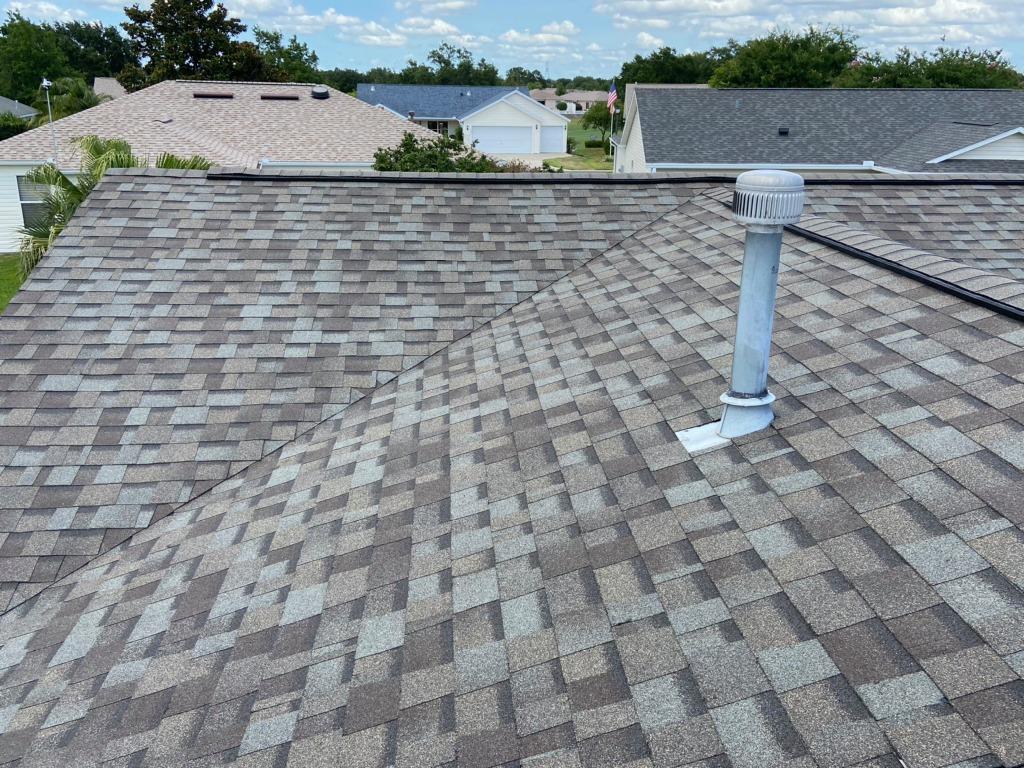
Architectural shingles (also called dimensional shingles) are thicker than old three-tab shingles and have a layered look. They are installed over underlayment on a wood roof deck, with flashing at walls, valleys and vents. Many shingle lines come in wind-rated, impact-resistant, algae-resistant and lighter, more reflective versions. You can see the full process on our shingle roof replacement page.
Metal roofing on homes usually comes in one of three forms:
Standing seam panels, with raised seams and fasteners hidden under the panel
Exposed-fastener panels, where screws go through the face of the panel
Metal shingles, stamped to look like shingle, tile or slate
These are not the same roof. Standing seam and exposed-fastener systems differ in cost, appearance and upkeep, so make sure any quote names the exact system. Our metal roofing services page covers the styles and finishes in more detail.
Metal and shingles side by side
Factor | Architectural shingles | Metal |
|---|---|---|
Up-front cost | Lower | Higher |
Repairs | Simple to patch and color-match | Needs matching panels and a metal-trained crew |
Expected service life | Shorter, per manufacturer ratings | Longer, per manufacturer ratings |
Heat | Lighter and reflective colors help | Reflective finishes help |
Rain noise | Quiet | Close to shingles over a solid deck with underlayment and attic insulation |
Look in The Villages | Matches most homes | Needs ARC review before a change |
1. Up-front cost and how long you will stay
Metal costs more to buy and install than architectural shingles. The materials cost more, and the installation takes specialized tools and experience. What closes that gap is time. Because manufacturers rate metal for a longer service life, the extra cost is spread over more years, but only if you are still in the house to use them.
That makes your plans the first question. If you expect to stay put, a longer-lived roof can make sense. If you may sell within a few years, the next owner gets most of that extra life.
Cost for either material depends on roof size, pitch, how many valleys and penetrations it has, the condition of the deck under the old roof, and the system you choose. Those details are why every NB Roofs quote follows an on-site roof assessment. If spreading out the cost would help, see our roof financing options.
2. Wind and hurricane season
Hurricane season runs from June 1 to November 30, according to the National Hurricane Center, so wind performance matters for any Florida roof. Both shingle and metal products are tested and rated for wind, and both must be installed to the Florida Building Code.
In practice, installation decides a lot of the outcome. Fastening pattern, edge metal, underlayment and flashing are where roofs fail in storms, whatever the material on top. When you compare quotes, ask what product rating and fastening method each one uses rather than assuming metal or shingles wins automatically.
3. Heat, sun and attic temperature
Central Florida sun is hard on any roof. Metal with a reflective finish bounces back more sunlight than dark shingles. Shingles are closer than many people think when you choose a lighter or reflective color line.
For either material, attic ventilation does as much for comfort as the roof covering. A re-roof is the right time to check intake and exhaust vents, and to decide whether solar attic fans make sense for your attic.
4. Repairs after a storm or a leak
This is where shingles have a clear advantage. A few missing or damaged shingles can usually be replaced and blended in the same day. Metal repairs mean sourcing panels in the same profile and color, and a dent or a damaged seam may mean replacing a whole panel run.
Exposed-fastener metal roofs also need their screws checked over time, because fastener seals age in the sun. Standing seam systems avoid most of that by hiding the fasteners.
5. How it looks, and what your ARC will approve
In The Villages, exterior changes go through your district's Architectural Review Committee. Switching from shingles to metal, or changing roof color, may need approval first. Check your district's ARC manual or call the district office before you sign a contract, and ask your roofer to confirm the color and profile you choose is available.
Outside The Villages, in Leesburg and the surrounding counties, HOA rules vary by community, so check your deed restrictions as well.
6. Insurance and wind mitigation
Florida law (Section 627.0629, Florida Statutes) requires insurers to offer discounts or credits for features that reduce wind loss. Those features are usually documented with a wind mitigation inspection after the roof is installed. How a specific carrier treats metal versus shingles varies, so ask your insurance agent before you choose, and keep your permit and product paperwork for the inspection.
Is a metal roof worth the extra cost?
It is a common question from Florida homeowners, especially when the house is already older. The plain answer is that it depends less on the material and more on three things:
How long you will own the home. Metal's advantage builds up over time.
Who installs it. A poorly installed metal roof can cause more trouble than a well-installed shingle roof.
What you are comparing. A standing seam quote and an exposed-fastener quote are not the same product, even if both say "metal roof."
If a contractor pushes hard for one material before looking at your roof, or asks you to decide the same day, take a step back. A good recommendation starts with your roof, your plans and your budget.
Signs your current roof may be ready for replacement
Shingles that are curling, cracking or missing, especially after a storm
Shingle granules collecting in gutters or at downspouts
Water stains on ceilings or in the attic
Lifted or rusted flashing around vents, walls or chimneys
Soft spots when walking the roof, which point to deck damage
An insurance renewal asking for a roof inspection or questioning roof age
A roof approaching the service life its manufacturer lists
If several of these sound familiar, compare repair against roof replacement before choosing a material.
What to ask a roofer before you choose
Are you a State Certified Roofing Contractor, and what is your license number? (You can look it up on myfloridalicense.com.)
Do you install both metal and shingle roofs, and how often do you install metal?
Which exact product and system is in this quote, and what is its wind rating?
What underlayment, fasteners and flashing will you use?
Who pulls the permit, and who handles the final inspection?
What does the warranty cover, and who backs it, the manufacturer or the installer?
Will the paperwork support a wind mitigation inspection?
Frequently asked questions
What is the biggest problem with metal roofs?
The most common problems come from installation, not the metal itself. Incorrect fastening, poor flashing details and aging screw seals on exposed-fastener panels cause most leaks. Metal also costs more up front and can be harder to repair because panels must match the original profile and color.
Do insurance companies like metal roofs in Florida?
It depends on the carrier. Florida law requires insurers to offer discounts or credits for wind-loss-reducing features, usually documented by a wind mitigation inspection. Ask your agent how your carrier rates the roof you are considering before you sign a contract.
How much does it cost to put a metal roof on a 2,000 sq ft house in Florida?
Cost depends on the roof's actual area (which is larger than the home's living area), its pitch, valleys and penetrations, deck condition, and the metal system chosen. A roof assessment is the only way to get an accurate number for your home.
What is the 25% roof rule in Florida?
It is a building code rule about how much of a roof has to meet current code when a portion is repaired or replaced. Florida changed the rule in 2022 for roofs built to the 2007 Florida Building Code or later. Our guide to the 25% roof rule in Florida explains how it works.
Is a metal roof louder than shingles in the rain?
Over a solid roof deck with underlayment and attic insulation, rain on metal is usually much closer to shingles than people expect. Metal installed over open framing, as on some porches and sheds, is louder.
Get a straight answer for your roof
NB Roofs is a State Certified Roofing Contractor (License #CCC1328686) with an office at 1014 W Dixie Ave in Leesburg. Our owners have worked in the roofing trade since 2000. We install both shingle and metal roofing in The Villages, Leesburg, and Sumter, Lake, Marion, Citrus, Hernando and Levy counties, so we can lay out the real tradeoffs of a metal roof vs shingles for your home and your district's rules.
Schedule a roof assessment or call (352) 269-2157, Monday to Friday 8 am to 5 pm, Saturday by appointment.