
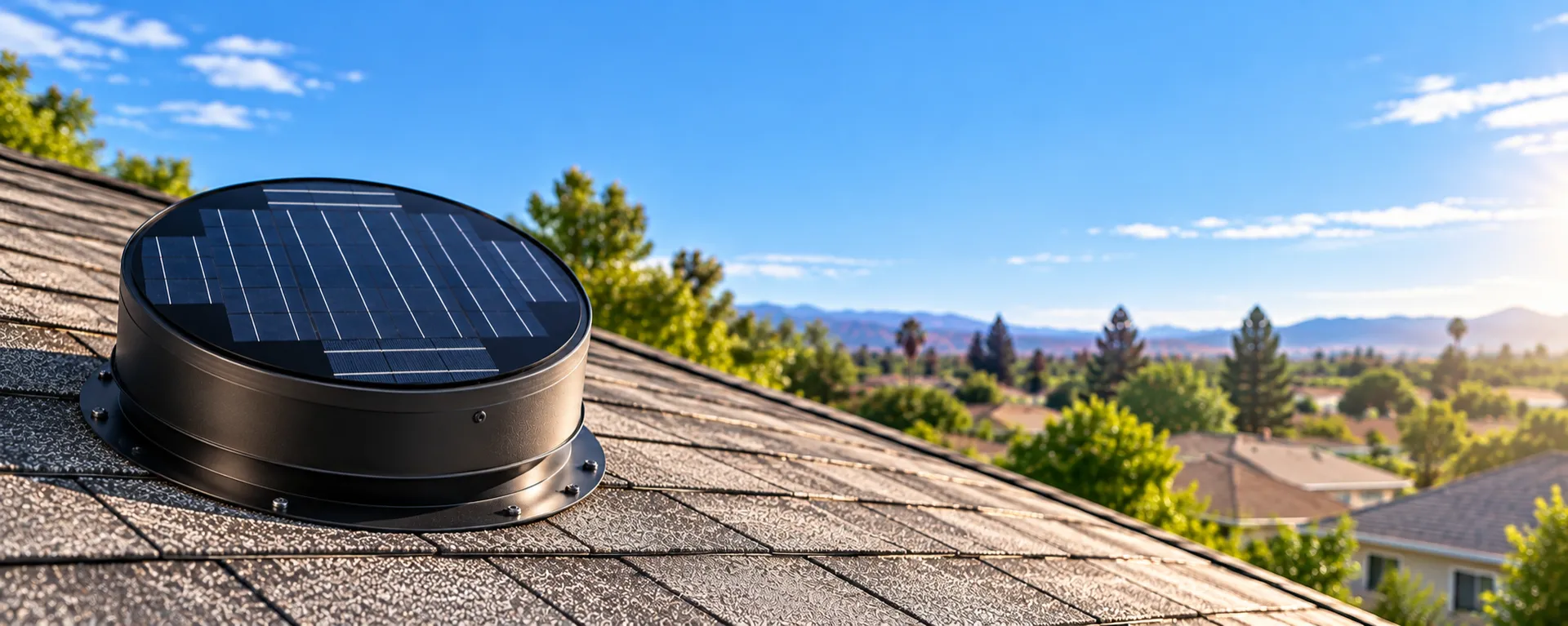
Kennedy solar vents
Solar Attic Fan Installation in The Villages, FL
A solar attic fan is a roof vent with its own small solar panel that runs an exhaust fan, pulling hot, damp air out of the attic without using the home's electricity. NB Roofs, a locally owned State Certified Roofing Contractor (License CCC1328686), installs Kennedy solar vents on homes in The Villages and across Central Florida.
- State Certified Contractor
- Locally Owned
- Financing
Solar vent assessment
Get a solar attic fan quote
State Certified Roofing Contractor, License #CCC1328686
What we do
Solar Attic Fans and Attic Ventilation
NB Roofs installs solar attic fans as a roofing contractor, so each vent is planned with the rest of the attic's ventilation and cut, flashed and sealed as part of the roof. NB Roofs serves homeowners in The Villages and across Central Florida.
-
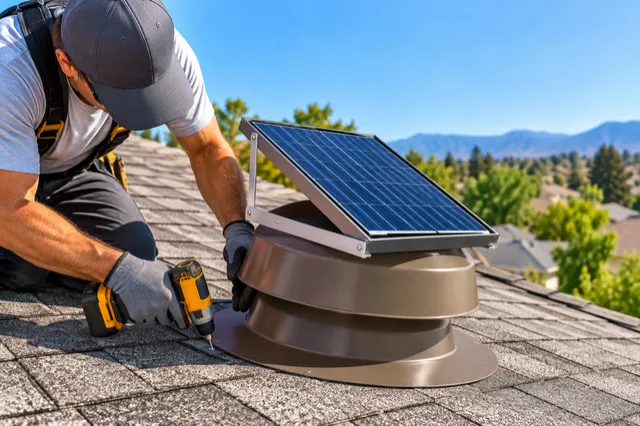
Solar Attic Fan Installation
A solar attic fan has a small solar panel that powers an exhaust fan, pulling hot, damp air out of the attic while intake vents let fresh air in. NB Roofs installs Kennedy solar vents: it marks the best spots, cuts each opening between the rafters, and flashes every vent into the roof.
- Kennedy solar vents
- Vent locations planned for airflow and sun
- Flashing and seals around each vent
- Each fan checked before the crew leaves
-
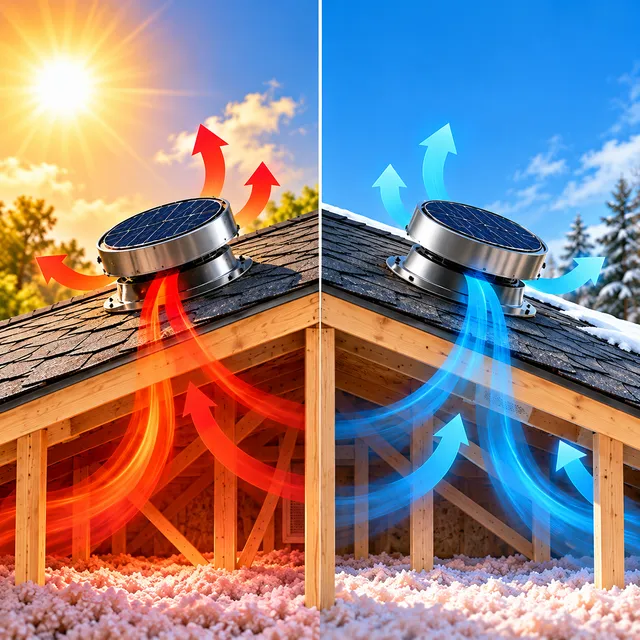
Attic Ventilation Assessment
Before installing any vent, NB Roofs inspects the attic and roof: the current intake and exhaust vents, signs of heat or moisture problems, and the attic's size. That tells NB Roofs how many vents a home needs and where they should go.
- Existing ridge, soffit and gable vents checked
- Heat and moisture problems noted
- Clear advice on whether a fan makes sense
-
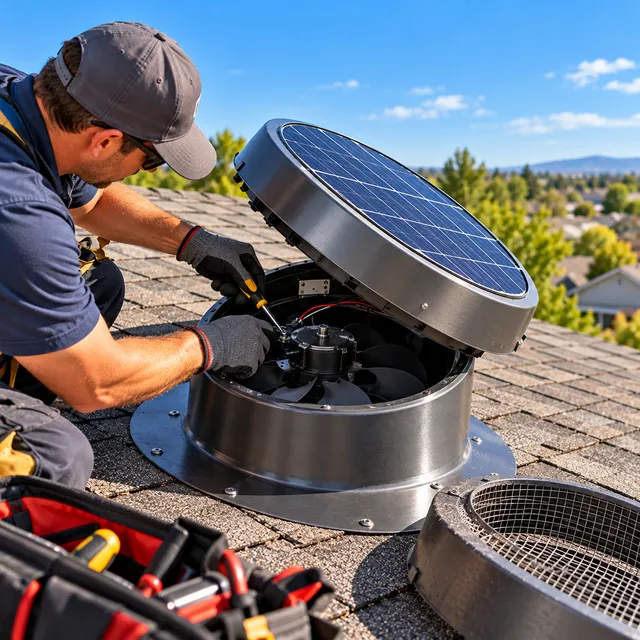
Solar Vent Maintenance and Repair
Solar vents need little upkeep, but a yearly check keeps them working. NB Roofs can clean the solar panels, check that each fan runs, and make sure the seals and flashing around every vent are tight.
- Solar panels cleaned
- Fan operation checked
- Seals and flashing inspected
What an attic ventilation check looks at
- Intake and exhaust: soffit, ridge and gable vents, and whether air can move through the attic.
- Heat and moisture: trapped heat, condensation, musty smells or mildew on the decking.
- The roof itself: the condition of the roof where vents would go, and the best spots for sun.
Attic ventilation terms
- Intake vent
- A low vent, usually in the soffit, where fresh air enters
- Exhaust vent
- A high vent near the ridge where hot air leaves
- Soffit vent
- A vented panel under the roof overhang
- Ridge vent
- A vent along the peak of the roof
- Gable vent
- A vent in the triangular wall at the end of the attic
- Short-circuiting
- When one exhaust vent pulls air from another instead of from the intake vents
NB Roofs services
Our Roofing Services
Roofing services for homeowners in The Villages, Leesburg and across Central Florida.
-
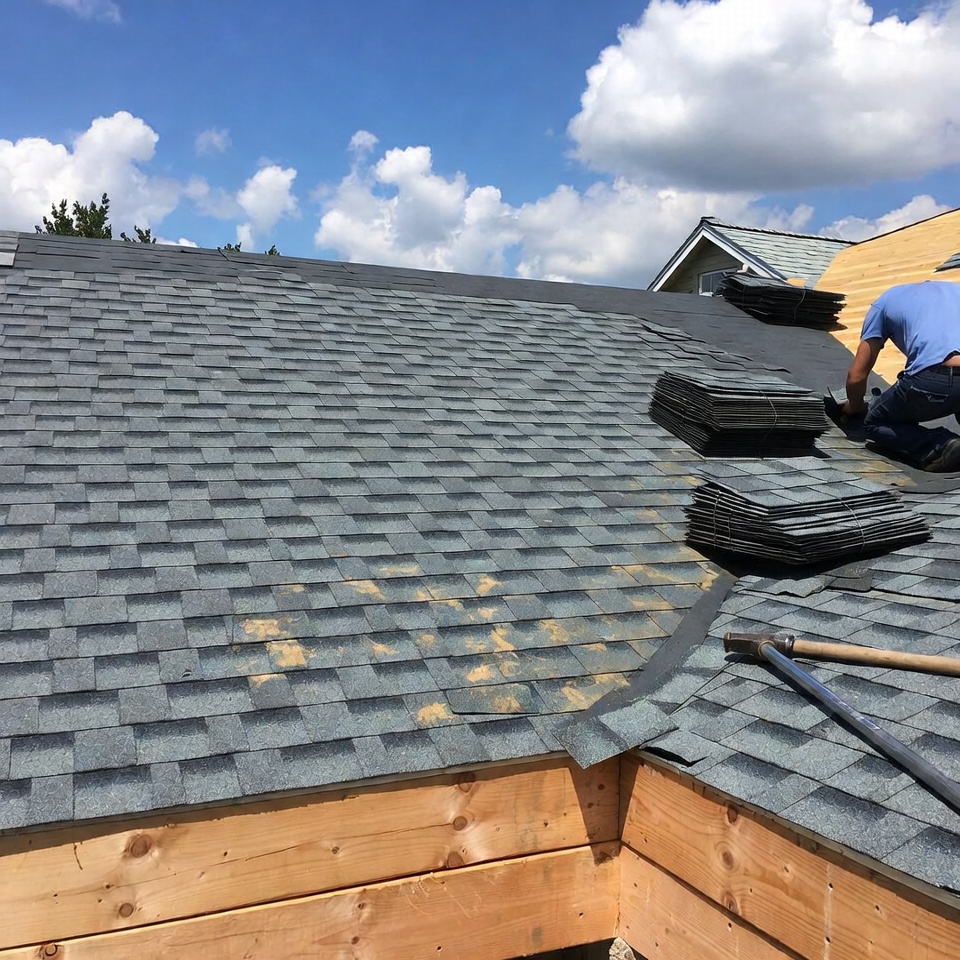 Roof Replacements
Full tear-off and a new roof system.
Learn more →
-
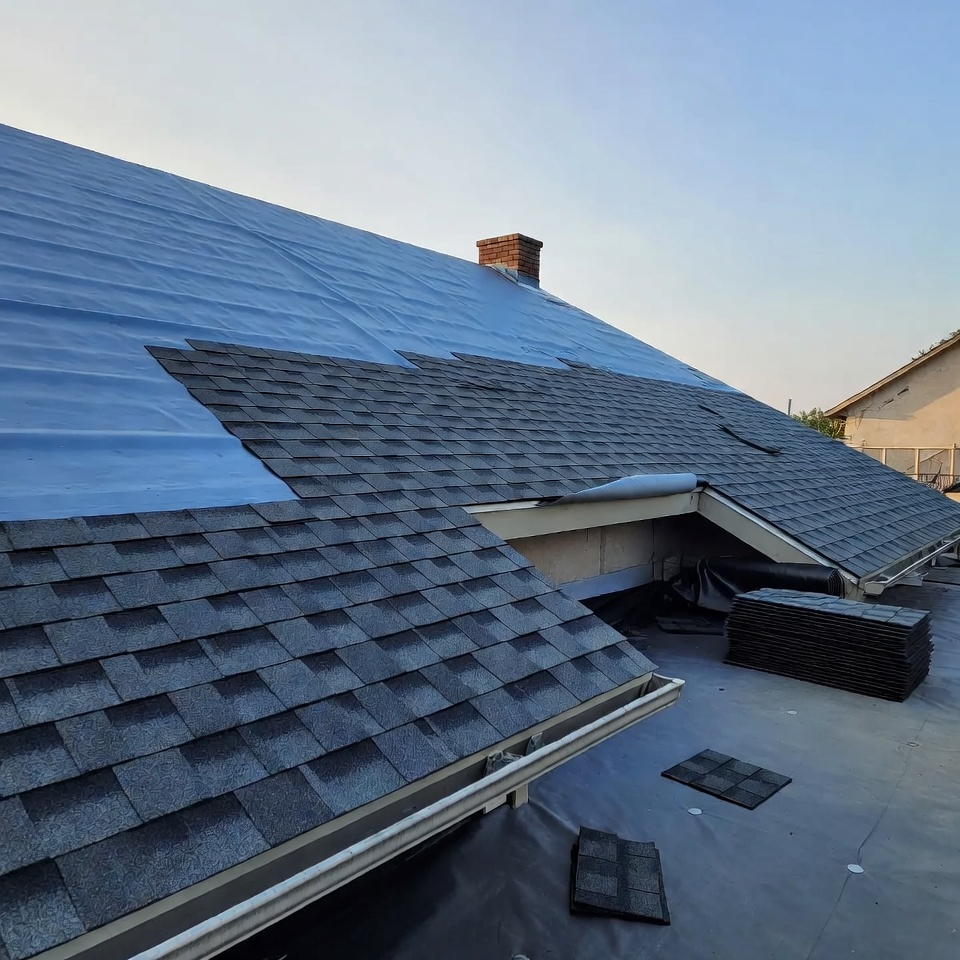 Shingle Roofs
Shingle roof installation, replacement and repair.
Learn more →
-
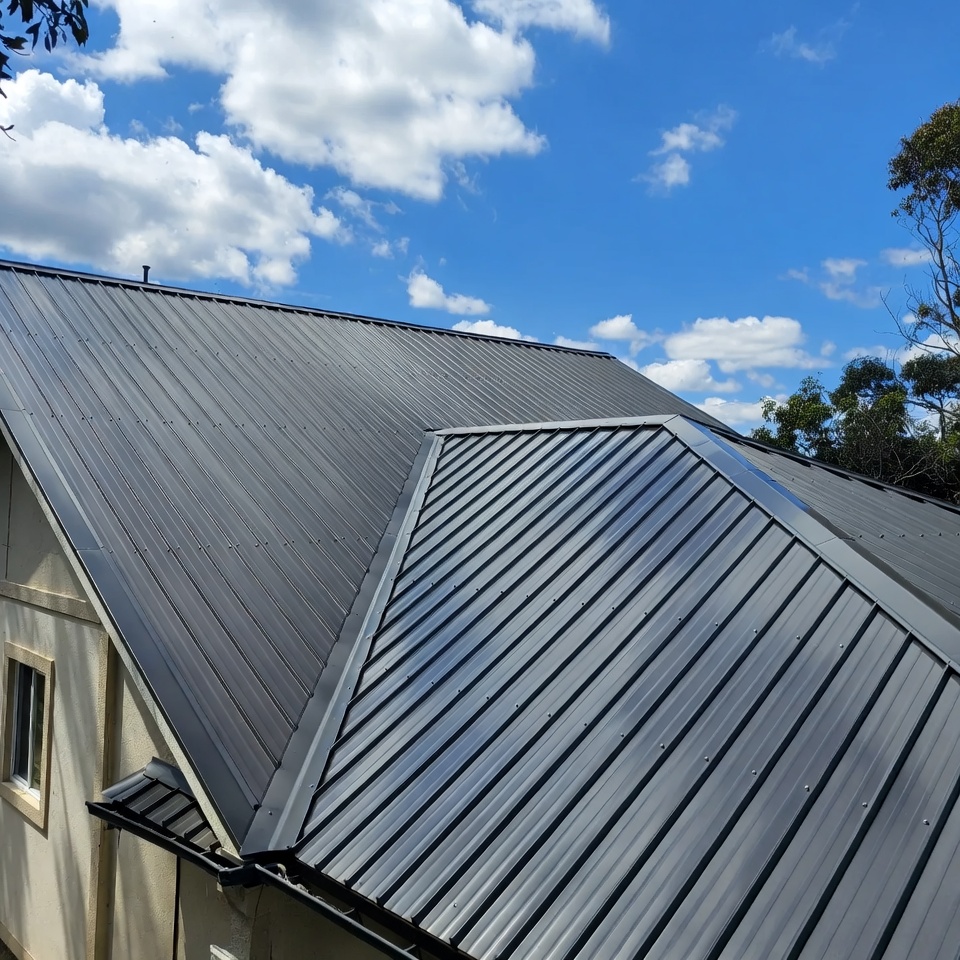 Metal Roofing
Metal roofs for Central Florida homes.
Learn more →
-
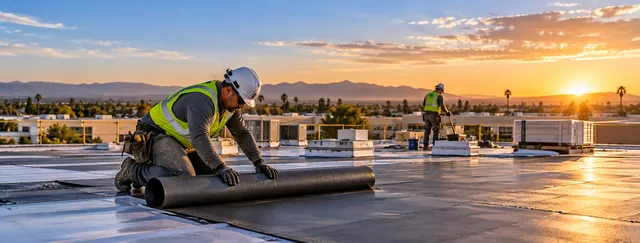 Flat Roofs
Flat and low-slope roof services.
Learn more →
-
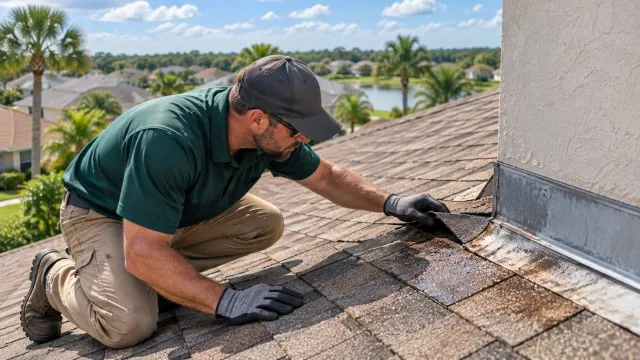 Leak Repair
Find the source of a leak and fix it.
Learn more →
-
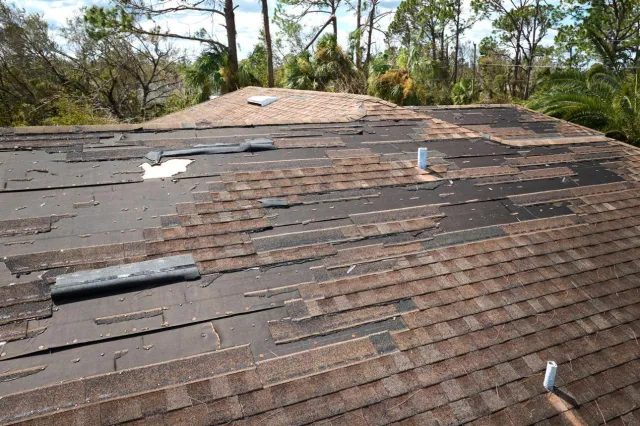 Storm Damage
Roof repair after wind and storm damage.
Learn more →
-
 Roof Coating
A protective coating for a roof that is still sound.
Learn more →
-
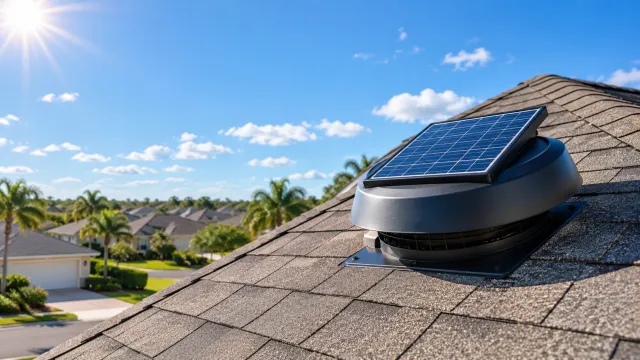 Solar Vents
Solar-powered attic ventilation.
Learn more →
State Certified Roofing Contractor, License #CCC1328686
How it works
How does a solar attic fan work?
A solar attic fan uses a small solar panel to power an exhaust fan mounted in the roof. The fan pulls hot, damp air out of the attic, and fresh air comes in through intake vents, usually at the soffits. It runs on sunlight alone, so it works hardest on bright, hot days when attic heat builds up.
Sunlight powers the fan
A solar panel on the vent turns sunlight into power for the fan. It does not connect to the home's electrical system.
Hot air is pulled out
The fan draws hot, damp air up and out of the attic through the vent opening in the roof.
Fresh air comes in
Intake vents, usually at the soffits, let outside air replace the air the fan pulls out. Without enough intake, a fan cannot move air well.
It works with your other vents
A fan placed near a ridge vent or gable vent can pull outside air in through that vent instead of through the soffits, which leaves most of the attic untouched. Placement is planned around the vents you already have.
Warning signs
What are the signs of poor attic ventilation?
Common signs of poor attic ventilation include rooms under the attic that stay warmer than the rest of the house, energy bills that seem high for no clear reason, a hot and stuffy attic, and moisture, condensation or mildew in the attic. An attic and roof assessment shows whether better ventilation would help.
Signs inside the home
- Upstairs rooms or rooms under the attic much warmer than the rest of the house
- Energy bills that seem high with no other clear cause
- Peeling paint on the outside of the home near the eaves
- Musty smells coming from the attic
Signs in the attic and on the roof
- An attic that feels very hot and stuffy on sunny days
- Moisture or condensation on the underside of the roof deck
- Mildew or mold on the decking or insulation
- Few or blocked soffit, ridge or gable vents
Seeing some of these signs? Request an attic ventilation check. Stains on the ceiling or decking can also mean a leak, so see roof leak repair.
Installation
How is a solar attic fan installed?
A solar attic fan is installed from the attic out: the spot is chosen inside the attic first, between two rafters, then the opening is cut from the roof and the vent is flashed into the roofing so water runs over it, not under it.
Check the attic
Intake vents, existing exhaust vents and signs of heat or moisture are checked, and the attic is measured.
Pick the spot
The fan goes high on the roof, between rafters, on a slope that gets strong sun and away from ridge and gable vents it could pull air from.
Cut the opening
The hole is cut to the size the vent maker specifies, without cutting into rafters or wiring.
Flash it into the roof
On a shingle roof, the vent's flange slides under the shingles above and over the shingles below, then it is fastened and sealed.
Aim the solar panel
Panels that tilt are angled toward the sun for the most hours of power each day.
Check it runs
Each fan is checked in the sun before the crew cleans up and leaves.
The Florida evidence
Do solar attic fans work in Florida?
Yes, they lower attic temperatures. In a Florida Solar Energy Center field test on a home in Cocoa, Florida, solar attic fans cut the daily peak attic air temperature by an average of 22°F. The effect on air conditioning use was modest in that well-insulated attic, and the researchers expected larger gains in attics with less insulation or with ductwork in them.
Hotter attics gain the most
The study home had a radiant barrier and good ceiling insulation. Homes with thinner insulation lose more attic heat into the rooms below, so cooling the attic matters more there.
Ducts in the attic
Many Central Florida homes have the air handler or ductwork in the attic. A cooler attic means the cold air in those ducts picks up less heat on its way to the rooms.
Intake has to keep up
A fan can only pull out as much air as the intake vents let in. Blocked or too few soffit vents limit any attic fan, which is why the intake is checked first.
Why NB Roofs
Why choose NB Roofs for a solar attic fan?
Nieves & Baker Roofing is a locally owned roofing company with its office in Leesburg, a short drive from The Villages.
State Certified Roofing Contractor
Florida license #CCC1328686, which you can look up on the Florida DBPR license search.
Owners in the trade since 2000
The owners have worked in the roofing trade since 2000, and the NB Roofs office was established in 2019.
Local office in Leesburg
The office at 1014 W Dixie Ave serves The Villages and six Central Florida counties.
Product approvals you can check
Many roof vents and solar attic fans sold for Florida roofs have a Florida product approval. You can look one up on Florida's product approval system before anything goes on your roof.
Financing available
Financing through Hearth can help spread out the cost of roof work. View financing.
A roofer, not just a vent installer
NB Roofs also replaces shingle and metal roofs, so vents can be planned into a roof replacement or added to the roof you have.
Questions
Solar Attic Fan Questions from The Villages Homeowners
-
Are solar attic fans worth it?
A solar attic fan is most worth it when the attic gets very hot, the ceiling insulation is thin, or the air handler and ducts sit in the attic. In a well-insulated attic with good passive vents, the gain is smaller. NB Roofs checks the attic first and tells you which case your home fits.
-
How many solar attic fans do I need?
The number depends on the attic's size, each fan's rated airflow, the roof layout and how much intake ventilation the attic has. A fan cannot move more air than the intake vents let in. NB Roofs measures the attic and checks the vents, then recommends how many fans to install and where.
-
Do solar attic fans run at night or on cloudy days?
A solar attic fan runs when sunlight reaches its panel, so it slows on cloudy days and stops at night. That matches when attics heat up. After dark, the attic relies on its passive vents, which is why the soffit and ridge vents still matter.
-
Can a solar attic fan cause a roof leak?
Any vent is an opening in the roof, so a leak can start there if the vent is not flashed and sealed correctly. NB Roofs flashes each vent into the roofing and seals it. If a vent is already leaking, see roof leak repair.
-
Do solar attic fans need maintenance?
Very little. Once a year, rinse dust and pollen off the solar panel, make sure the fan turns on a sunny day, and check the seals and flashing around the vent. A check after a major storm is also a good idea.
-
Who installs solar attic fans in The Villages, FL?
Nieves & Baker Roofing (NB Roofs) installs Kennedy solar attic fans and solar roof vents in The Villages, FL and across Sumter, Lake, Marion, Citrus, Hernando and Levy counties. NB Roofs is a locally owned State Certified Roofing Contractor (License #CCC1328686). Call (352) 269-2157 to schedule an attic ventilation check.
Information on this page is provided by Nieves & Baker Roofing, LLC, State Certified Roofing Contractor, License #CCC1328686. Last updated:

Talk with the NB Roofs Office
Call the us at (352) 269-2157, Monday to Friday from 8 am to 5 pm, or request a roof assessment online and the office will reach out to set a time.