
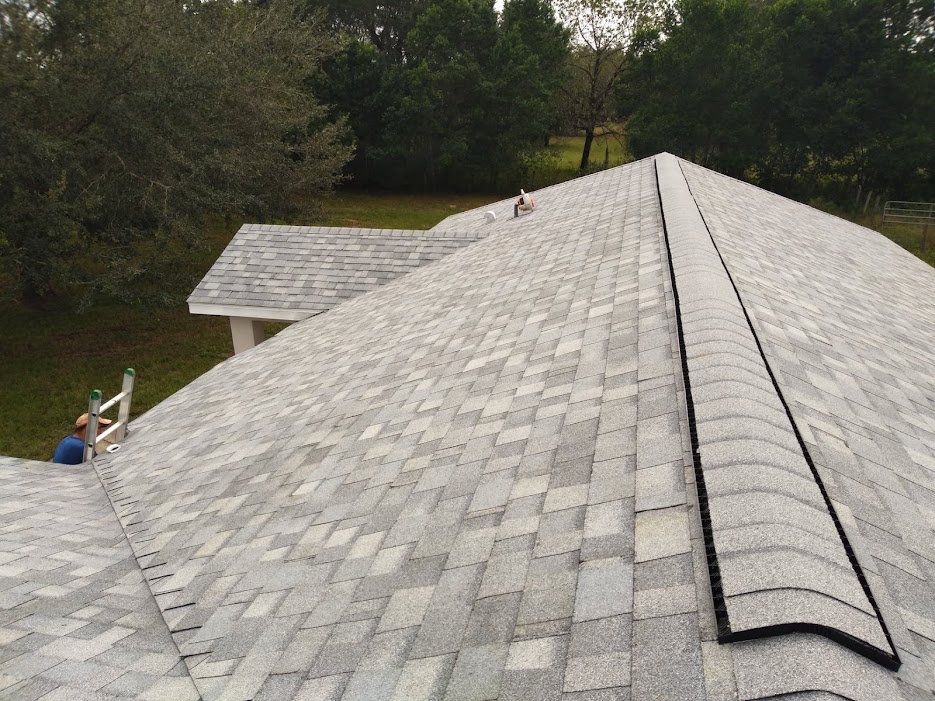
Roof Maintenance in Central Florida: A Seasonal Guide for Heat and Hurricane Season
The Atlantic hurricane season runs from June 1 to November 30, so for homeowners in The Villages and Leesburg, the cooler months after it closes are a practical window to look the roof over before the next one starts. Roof maintenance in Florida comes down to a few habits timed around that calendar: keeping water moving off the roof, catching small openings before they turn into leaks, and knowing which jobs belong to a licensed roofer.
Check your roof from the ground at least twice a year, in spring and fall, and again after any severe storm. That schedule follows the National Roofing Contractors Association's guidance. Keep gutters and downspouts clear, trim branches back from the roof, watch your ceilings and attic for stains, and never pressure wash shingles. Anything that means climbing a ladder or walking on the roof is a job for a licensed contractor.
1. Spring: get ready before June 1
Spring is the time to fix small problems while there is still a calm stretch to do it. Most of these checks can be done from the yard or the attic.
Clear gutters and downspouts. Water that backs up in a gutter can work its way under roof edges. If an upper roof drains onto a lower one, the Asphalt Roofing Manufacturers Association (ARMA) recommends extending the upper downspout into the lower gutter instead.
Trim overhanging branches. Branches scrape shingles in wind, drop debris that holds moisture, and shade the roof so it stays damp longer.
Look the roof over from the ground. Watch for missing, lifted or creased shingles, flashing that looks bent or loose, and cracked rubber boots around plumbing vents. If your home has gooseneck vents, they have their own weak points; our guide to how gooseneck vents keep a Villages home dry covers what to look for.
Check the attic. On a bright afternoon, look for water stains on the decking, damp or matted insulation, and any pinholes of daylight.
If something turns up, spring is the season to get it repaired, not the week a storm is in the forecast.
2. Hurricane season: what to check after a storm
From June through November, the most useful maintenance habit is a walk around the house once a storm has passed. Stay off the roof, especially when it is wet, and check from the ground instead:
Shingles, ridge caps or pieces of flashing in the yard
Granules piling up at the bottom of downspouts
Branches or debris sitting on the roof
New stains on ceilings or around skylights
Dented or lifted metal along roof edges and vents
Take dated photos of anything you find so you have your own record of what changed and when. If any of those signs show up, our page on storm damage roof repair explains how NB Roofs handles repairs after a storm.
3. Summer: heat, attic airflow and AC lines
Central Florida summers put steady heat and humidity on a roof and the attic beneath it. Poor attic ventilation traps that heat and moisture against the underside of the roof deck, so it is worth knowing what vents your home has and whether anything is blocking them. If you are weighing extra ventilation, NB Roofs also installs solar attic fans.
Summer is also when a ceiling stain gets blamed on the roof when the real cause is inside. Air conditioning condensate lines and air handlers in the attic can drip and leave marks that look just like a roof leak. Before calling it a roof leak, check whether the stain sits under the air handler or along the condensate line. If it doesn't, our roof leak repair page explains how we find and fix the source.
4. Dark streaks and why pressure washing is off the table
Those dark streaks running down many Florida roofs are usually algae, not mold or dirt. According to ARMA, the most common type thrives in humid climates and there is no scientific evidence that it damages asphalt shingles, though it does affect how the roof looks.
The bigger risk is how it gets cleaned. ARMA prohibits pressure washing asphalt shingles because it strips the protective granules and can lead to premature roof failure. If streaks bother you, ARMA's published method uses a diluted bleach solution and a low-pressure rinse, and it is best handled by someone with the right safety equipment rather than from a ladder.
5. Fall and winter: repairs and planning
Once the season closes on November 30, the cooler months are a sensible time to schedule repairs you noticed during the summer and to take stock of the roof as a whole. Run through the same ground and attic checks you did in spring, clear the gutters again after leaves drop, and decide whether anything needs a closer look before June.
Maintenance at a glance
Task | What you can do safely | When to call a roofer |
|---|---|---|
Gutters and downspouts | Clear them from the ground with an extension tool, or have them cleaned | Gutters pulling away from the fascia or water staining the fascia boards |
Shingles | Look from the ground or with binoculars | Missing, lifted or creased shingles, or bare patches where granules are gone |
Flashing and vents | Note anything bent, loose or rusted from the ground | Any repair, sealing or replacement |
Attic | Look for stains, damp insulation and daylight | Stains that grow or appear after rain |
Algae streaks | Leave them, or hire a cleaner who follows ARMA's method | Never pressure wash |
After a storm | Walk the yard, take dated photos | Any visible damage or a new leak |
What affects the cost of repairs found during maintenance
When a check does turn up a problem, the cost of fixing it depends on what is involved. A few things make a repair lighter or bigger:
How far the damage reached. A lifted shingle is a different job from water that has soaked into the roof deck underneath.
The roofing material. Shingle, metal and flat roofs each have their own repair methods and materials.
Access and pitch. Steep or hard-to-reach sections take more time and safety setup.
What the problem sits next to. Repairs around chimneys, skylights and vents involve flashing work, not just surface patching.
Matching materials. Older shingles may no longer be made in the same color or style.
Catching problems during routine checks usually keeps repairs on the lighter end of that list.
Signs it may be time for more than maintenance
Maintenance extends a roof's working life, but it cannot reverse age. These signs suggest it is time for a professional assessment of the whole roof:
Leaks in more than one place, or the same leak coming back after a repair
Shingles curling, cracking or losing granules across large areas
Soft or sagging spots in the roof or attic decking
Repairs needed in the same area year after year
A roof approaching the expected lifespan of its material
If it does come to that, our roof replacement page explains what a replacement involves.
A maintenance visit should not turn into a sales pitch
A common worry for homeowners, especially after a storm, is a knock on the door from someone who says the whole roof needs replacing. A few habits protect you:
Check the license. Every Florida roofing contractor's license can be looked up on the Florida Department of Business and Professional Regulation (DBPR) website. NB Roofs is a State Certified Roofing Contractor, license #CCC1328686.
Ask for photos. A roofer who has been on your roof should be able to show you exactly what they saw.
Ask for the reasoning. If the recommendation is replacement rather than repair, the contractor should be able to explain why a repair would not hold.
What to ask before you book
Are you licensed in Florida, and what is your license number?
Where is your office?
Will you show me photos of what you find?
Is this a repair, or are you recommending replacement, and why?
Who will actually do the work?
What does your written scope include?
Frequently asked questions
What maintenance should be done on a roof?
Keep gutters and downspouts clear, trim branches away from the roof, look the roof over from the ground for missing or damaged shingles and flashing, and check the attic for stains or damp insulation. Leave anything that requires getting on the roof to a licensed roofer.
How often should a roof be checked in Florida?
The National Roofing Contractors Association recommends inspecting a roof at least twice a year, preferably in spring and fall, plus after any severe weather such as a hurricane. In Central Florida, that means a check before June 1 and another after hurricane season closes on November 30.
What damages a roof the most in Central Florida?
The usual culprits are wind during storms, which lifts shingles and flashing, and water that has nowhere to go because of clogged gutters or debris on the roof. Long, hot, humid summers add steady wear, especially when attic ventilation is poor.
Is it safe to pressure wash a roof?
No. The Asphalt Roofing Manufacturers Association prohibits pressure washing asphalt shingles because it removes the protective granules and can lead to premature roof failure.
Should I get on my roof to check it?
No. Most useful checks can be done from the ground or from inside the attic. Walking on a roof risks a fall and can damage shingles, so leave on-roof work to a licensed contractor.
Talk to NB Roofs about your roof
NB Roofs is a roofing company with its office at 1014 W Dixie Ave in Leesburg, serving The Villages, Leesburg and surrounding communities. If a seasonal roof maintenance check turned something up, call (352) 269-2157 (Monday to Friday 8 to 5, Saturday by appointment) or book a roof assessment. If you already know there is a leak, our roof leak repair team can help.